
Chicago Has Six Bad Days: Hood Warfare 2 Turns One City Block into Six Different Wars
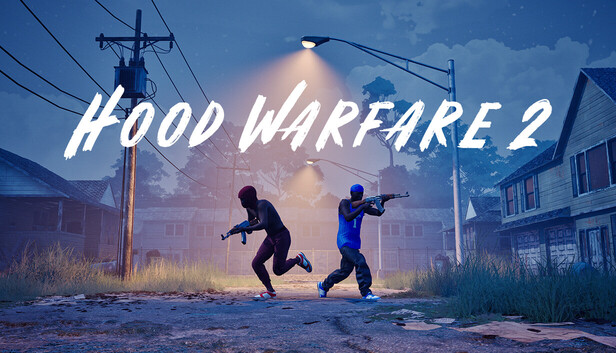
A city divided by rival crews, a neighborhood full of trouble, and six different ways to turn an ordinary afternoon into complete chaos. Hood Warfare 2 transforms Chicago into a multiplayer battlefield where territory, money, explosives, and even gold chains can decide who rules the streets.

1. Chicago Is Not the Setting. It Is the Main Character.
Every city has a personality.
Some cities are known for their architecture. Others are famous for their nightlife, food, or beautiful skylines. But in Hood Warfare 2, Chicago has a different reputation: it is a place where every street corner feels like a potential conflict.
The game builds its identity around fictional rival gangs fighting for control of the city. Players choose a side, customize their weapons, and compete across different urban environments. The atmosphere combines multiplayer FPS action with exaggerated humor and a deliberately chaotic presentation.
What makes the setting interesting is its variety.
Downtown offers an urban environment filled with buildings and different routes. The Suburbs create a different atmosphere, while The Trenches and Chicago Mall introduce their own layouts and combat spaces.
The city is not simply a backdrop for players to exchange gunfire. Its different locations influence the character of every match.
A fight inside a shopping mall feels different from a confrontation across an open street. A neighborhood can become a place to defend, while another location becomes the center of an aggressive push.
In this version of Chicago, the question is never whether something will happen.
It is which part of the city will become the next problem.
2. Six Game Modes, Six Completely Different Neighborhood Personalities
A multiplayer shooter can become repetitive when every match follows the same objective. Hood Warfare 2 approaches this differently by giving players six distinct game modes.
Each mode changes what winning actually means.
Turf War: The Neighborhood Belongs to Whoever Can Hold It
In Turf War, rival gangs compete for control of territory across the map. Holding territory earns points, while pushing the opposing team away becomes the central objective.
It turns the battlefield into a struggle for ownership. Eliminating an opponent matters, but controlling the area is what makes the difference.
GangBang: No Negotiations, Just a Team Shootout
GangBang is the classic team-versus-team experience. Two gangs face each other, and the team with the most kills wins.
It is the most straightforward expression of the game's rivalry theme: two sides, one battlefield, and a scoreboard that does not care about excuses.
Chaos: Everybody Is Your Problem
Sometimes loyalty is overrated.
Chaos removes gang allegiance and turns the match into a free-for-all. Every player competes individually, with the most kills determining the winner.
There are no teammates to rely on, and every encounter can become a personal competition.
Hit A Lick: The Neighborhood's Most Unusual Delivery Service
Hit A Lick gives teams a robbery-style objective. Players must take the enemy's bag and bring it back to their own hood while protecting their own bag.
This creates a different kind of match because the objective requires more than winning gunfights. Both teams must think about attacking and protecting their own territory.
Destroy The Block: One Bomb, One Chance
Destroy The Block revolves around planting and defusing a bomb. One gang attempts to complete the objective, while the other tries to stop them.
There is an important twist: players have only one life per round.
This changes the atmosphere considerably. Every confrontation carries more weight, and a careless decision can remove a player from the round entirely.
Chain Snatch: The Most Expensive Jewelry Collection in Chicago
In Chain Snatch, getting a kill is only half the job. Enemies drop chains that can be collected for points, while players can also recover the chains dropped by their own teammates.
It is a particularly entertaining objective because the fight does not necessarily end when an opponent is eliminated. What happens immediately afterward still matters.
Together, these six modes make the same city feel like six different competitive environments. <Cite refs={["turn682655view0","turn682655view1"]}/>
3. Turf Is More Valuable Than Your Personal Kill Record
There is an interesting difference between winning a firefight and winning a territory war.
A player can dominate individual encounters and still fail to help their team achieve its actual objective. This distinction becomes particularly important in Turf War.
The mode makes territory the center of attention. The value of a location comes from the points it generates for the gang controlling it.
This changes how the city is experienced.
A street corner is no longer just somewhere to fight. It becomes a valuable position. An important area can determine how quickly a team accumulates points. Losing control of that area may create pressure even when individual players are performing well.
It also gives teamwork a different meaning.
Instead of measuring the entire match through personal performance, the team needs to maintain control over the spaces that matter.
This is one of the more interesting ideas behind Hood Warfare 2: the battlefield is not always about who has the highest number of eliminations.
Sometimes, the most important player is simply the one who helps the team keep its neighborhood.
The scoreboard may remember the kills.
The territory decides the winner.
4. From Downtown to the Mall: Every Map Has Its Own Drama
A good multiplayer map should do more than look different. It should create different situations and give players reasons to approach the battlefield differently.
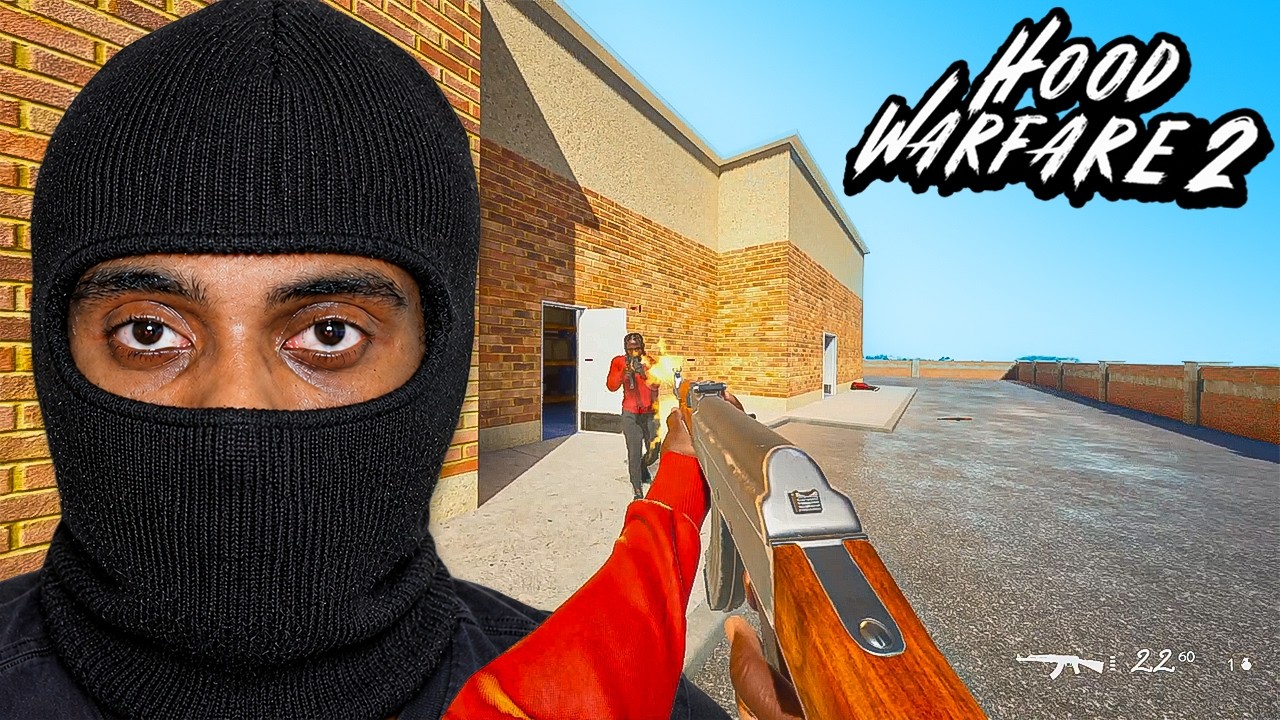
Hood Warfare 2 features a collection of urban environments, including Downtown, Suburbs, The Trenches, and Chicago Mall. <Cite refs={["turn682655view0","turn682655view1"]}/>
These locations help establish the game's broader visual identity.
Downtown provides the atmosphere of a city center, where buildings and streets create an urban battlefield. The Suburbs move the conflict into residential surroundings. The Trenches introduce a different visual and spatial character, while Chicago Mall takes the fight indoors.
That variety helps the six game modes feel less like repeated matches in different lobbies.
A particular objective can have a very different atmosphere depending on where it takes place. A team shootout in an urban street is not quite the same experience as one inside a shopping center.
The environments also become part of the match's personality.
Players may remember a particular location because of a chaotic encounter, a dramatic comeback, or a match that somehow turned into an unforgettable disaster.
A map becomes memorable not only because of its layout, but because of what happened there.
In a game built around fictional neighborhood rivalries, every location has the potential to become part of the legend.
5. Your Weapon Is Your Signature, Not Just Another Item
In some shooters, players choose a weapon, equip a few basic upgrades, and jump straight into combat.
Hood Warfare 2 offers a more involved customization system.
Players can modify weapons using sights, magazines, grips, suppressors, and other attachments. They can also prepare loadouts with perks and equipment before entering a match. <Cite refs={["turn682655view0","turn682655view1"]}/>
This gives the weapon system another layer of identity.
A weapon is no longer simply something selected from a menu. It becomes part of the player's personal setup.
The customization options allow players to adjust their equipment and develop a loadout that feels suited to their preferred experience.
There is also a progression connection.
Playing matches builds reputation and unlocks additional weapons and equipment. Weapon challenges reward attachments, while kills with individual guns unlock skins.
This creates several reasons to keep playing beyond the result of a single match.
The player is developing a collection, working toward additional customization options, and gradually building an identity through their equipment.
Eventually, a familiar weapon setup can become part of how other players recognize you.
In a city where everyone is trying to establish a reputation, looking like an ordinary newcomer is probably not the plan.
6. Reputation Is the Currency Nobody Can Buy
Money can purchase equipment, but reputation is something players build through participation.
Hood Warfare 2 connects match progression with a leveling system that unlocks more weapons and equipment as players gain experience.
It gives the multiplayer experience a sense of continuity.
A match ends, but the player's overall progression continues. Challenges provide another reason to experiment with different weapons, while individual weapon skins create additional rewards for spending time with particular firearms.
This is an appealing design choice because it gives different activities their own progression value.
Playing matches contributes to reputation. Completing weapon challenges develops individual equipment options. Getting eliminations with specific guns unlocks cosmetic rewards.
The result is a progression system that connects the player's overall performance with their personal collection.
There is also a psychological element to it.
A player who has spent time developing a particular loadout may feel more attached to it than someone who simply selected a default weapon.
The equipment becomes a record of previous matches.
A weapon skin might represent hours of experimentation. An unlocked attachment might be the result of completing a challenge. A higher reputation level reflects the time spent competing across the city.
Chicago may have many ways to measure success, but your progression menu keeps its own records.
7. The Best Part of a Gang War Might Be the People Causing It
Multiplayer shooters are often remembered for their gunplay, but the people playing them can become just as important as the actual mechanics.
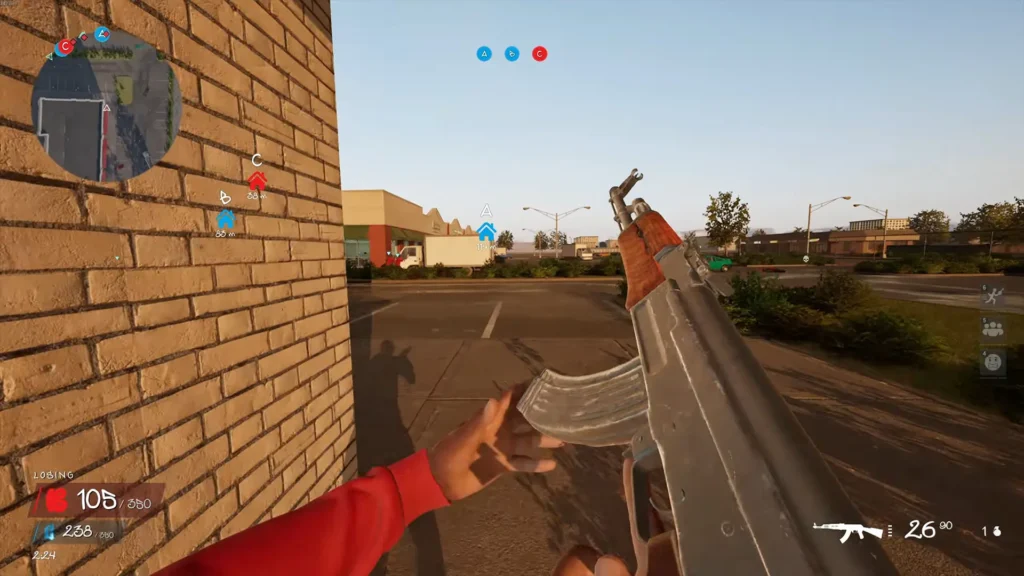
Hood Warfare 2 supports online multiplayer with friends and other players, while also allowing players to create matches against bots. Match settings, maps, and modes can be selected when setting up these experiences. <Cite refs={["turn682655view0","turn682655view1"]}/>
That flexibility gives the game more than one social atmosphere.
Playing against other people creates unpredictable encounters. Teammates may coordinate well, misunderstand an objective, or turn a normal match into an unexpectedly chaotic experience.
Playing with friends adds another dimension.
The match becomes a shared event rather than just another online session. A close victory can become something to celebrate, while an embarrassing defeat may become a running joke for the rest of the evening.
The game's exaggerated humor also contributes to its identity.
Not every encounter needs to feel like a serious military operation. Sometimes the appeal is the ridiculousness of the situation itself.
One match might be a competitive fight for territory. Another might become a chaotic race for dropped chains. A third might end with everyone wondering how an apparently simple objective turned into such a disaster.
The city supplies the conflict.
The players provide the personality.
8. November's City Update: The Streets Are Still Changing
A multiplayer game can lose some of its appeal when its systems remain unchanged for too long.
One interesting aspect of Hood Warfare 2 is that its development continued through several updates following its October 8, 2026 release.
The November 3 update, version 1.0.2.2, introduced character customization, improvements to matchmaking and parties, map voting, redesigned interface elements, and additional controller options. It also improved spawning and added player statistics. <Cite refs={["turn967268view0"]}/>
These changes matter because they affect more than the appearance of the game.
Character customization gives players another way to establish their identity. Improved parties make it easier for friends to play on the same team. Map voting gives players more influence over what environment comes next.
The update also reflects an important part of the multiplayer experience: the game is not only about adding weapons or maps. The systems surrounding each match influence how enjoyable it is to play.
A smoother party experience can make a session with friends more convenient. Clearer menus and scoreboard information can make the overall match flow easier to follow.
The city may be fictional, but the experience of returning to it depends on how well its underlying systems continue to evolve.
And with more content planned by the developer, Chicago's story is not necessarily finished.
9. A City Built for Chaos Needs More Than One Kind of Winner
One reason Hood Warfare 2 stands out from a conventional team deathmatch experience is that its six modes create different definitions of success.
In GangBang, the most important outcome is winning the kill competition. In Chaos, the player competes individually. Turf War rewards territorial control, while Hit A Lick makes the objective revolve around retrieving a bag.
Destroy The Block emphasizes the planting and defusing objective, and Chain Snatch rewards players for collecting dropped chains.
These different scoring systems create a range of match personalities.
A player who enjoys direct team combat may gravitate toward GangBang. Someone who prefers individual competition may enjoy Chaos. Players looking for more objective-based encounters can explore the remaining modes.
This variety helps prevent the game from being defined by a single style of play.
It also creates a natural reason to experiment.
A familiar map may feel completely different when the objective changes. A player who dominates in one mode may discover that another requires a different approach to teamwork and decision-making.
There is no universal version of a successful match.
Sometimes your gang wins through territory. Sometimes it wins through coordination. Sometimes it wins because the other side simply cannot stop someone from walking away with the objective.
The city does not care how you earn your reputation.
It only remembers the result.
10. Chicago Never Really Has an Ordinary Day
The appeal of Hood Warfare 2 comes from its combination of multiplayer combat, exaggerated humor, weapon customization, urban environments, and a collection of objectives that give every match a different direction.
It is not trying to tell one long cinematic story with a fixed protagonist. Instead, it provides a competitive setting where players create their own stories through repeated matches.
A territory battle can become a dramatic comeback. A bomb objective can turn into a tense final round. A chain collection can become the most chaotic moment of the entire session.
Even the progression systems contribute to that sense of continuity.
The weapons you unlock, the attachments you earn, and the skins you collect gradually become part of your own history within the game.
This makes Chicago feel less like a static map and more like a place where different rivalries and experiences keep appearing.
One day, you are fighting to control the neighborhood. Another day, you are competing over a bag, defending an objective, or collecting chains after a chaotic confrontation.
There is no single way to define the city's champion.
There are simply different games, different objectives, and different opportunities to leave your mark.
Conclusion: Six Modes, One City, and Absolutely No Quiet Neighborhoods
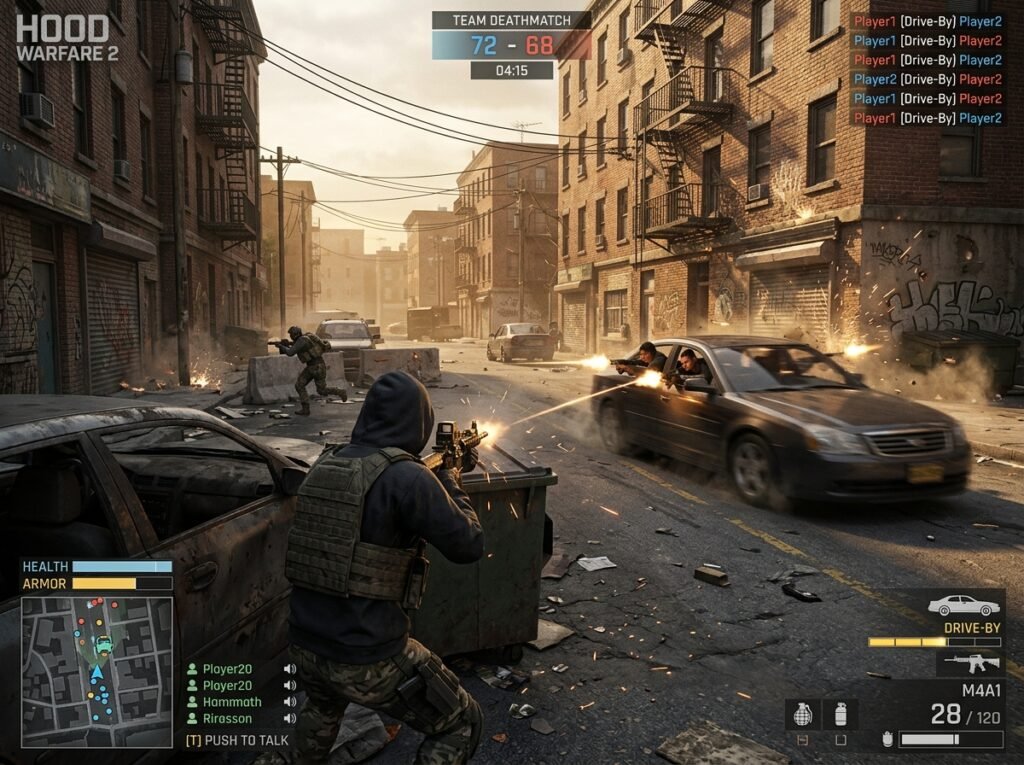
Hood Warfare 2 turns fictional gang rivalries into a chaotic multiplayer FPS experience where the same city can host six very different competitions.
Its maps provide the setting, its weapon customization and progression systems give players room to develop their own identities, and its game modes create different reasons to fight.
What makes the experience interesting is the variety of objectives. Winning is not always about getting the most eliminations. It may mean controlling territory, returning a stolen bag, planting a bomb, or collecting chains before the opposing team does.
The game's evolving character customization, party systems, and map voting also add more ways to shape the experience beyond the actual combat.
At its core, Hood Warfare 2 is a game about competition, chaos, and the unpredictable stories that emerge when players are placed in the same virtual city with different objectives.
Chicago has plenty of neighborhoods, but apparently not enough room for everyone to be in charge.
Pick your side, choose your loadout, and prepare for another day in a city where even a simple trip down the block can become a full-scale multiplayer showdown.