.webp)
The Netcode Fracture: How Client Authoritative Physics and Server Tick Degradation Destroyed the Competitive Aerial Player versus Player Ecosystem in Aion Two
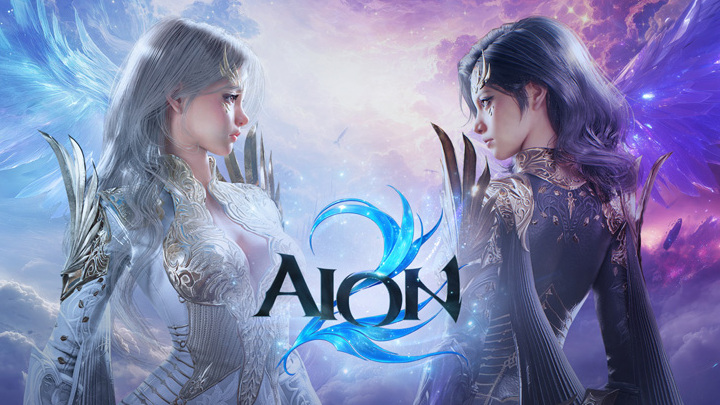
With the commercial debut of the highly anticipated massively multiplayer online role playing game sequel, Aion Two, the gaming landscape bore witness to a daring technological leap. Shifting away from the restrictive terrestrial boundaries of contemporary role playing games, the developers reintroduced and radically scaled the signature mechanic of the franchise: true three dimensional aerial combat. In the shattered vertical battlegrounds of the sky, players do not merely engage in conventional ground-based target selection. Instead, they utilize omnidirectional flight engines, dynamic windstream channels, and vertical momentum scaling to wage war across massive, un-instanced atmospheric environments.
However, beneath this majestic canvas of aerial choreography lies a catastrophic engineering flaw that has completely fractured the competitive matchmaking and high-tier faction warfare of the game. The architecture relies on an unrefined hybrid netcode engine that forces the client-side physics simulation to constantly negotiate high-velocity vertical vectors without a modern server referee. When hundreds of players clash in the sky during siege events, the game engine suffers from a profound desynchronization vulnerability officially designated by the community as the Chronos Asymmetry Crisis. This technical analysis explores the systemic breakdown of the network topology of Aion Two, examining how spatial netcode latency, server tick degradation, and client-side vector authorization have permanently warped the high-level Player versus Player meta.
1. The Aerial Topology: Designing Three Dimensional Combat on an Aging Server Architecture
To understand the systemic emergence of the network crisis, one must first isolate the unique mechanical constraints Aion Two places on its underlying server architecture. In a standard terrestrial massively multiplayer online game, positional calculations are relatively inexpensive. The server handles movement on a two dimensional horizontal plane, using a simple height mesh to snap characters to the ground. Aion Two, conversely, demands continuous, non-linear tracking across all three spatial axes simultaneously, compounding the data overhead by integrating real-time glide velocity physics and rotational orientation factors into every single packet.
To mitigate the extreme processing costs of tracking thousands of simultaneous three dimensional movement paths, the developers implemented a specialized Client Authoritative Predictive Network model. In this setup, the local machine of the player calculates their exact position in the sky, projects their flight trajectory forward by a fraction of a second, and broadcasts this spatial vector to the regional server instance. The server is then tasked with taking these disparate client vectors, stitching them together into a coherent global timeline, and broadcasting the unified state back to all connected players.
This architecture introduces immediate structural friction under competitive conditions. Because the internal frame processing rate of the server—the tick rate—is capped at a highly conservative threshold during mass scale engagements, it frequently receives conflicting spatial data from players possessing varying degrees of network latency. The server is forced to perform wild algorithmic guesswork to reconcile where an aerial target is on their own monitor versus where the attacker claims they are, laying the groundwork for severe positional displacement.
2. Deconstructing the Temporal Drift: Tick Rate Degradation During Mass Aerial Sieges
The true breaking point of the aerial netcode of Aion Two manifests during the flagship endgame content of the game: Abyssal Fortress Sieges. These events draw hundreds of players from opposing factions into a singular open world sky zone to battle over floating fortresses. As the sheer density of spell effects, environmental wind streams, and player movement commands increases, the regional server hardware enters a state of severe processing strain, causing its authoritative tick rate to plummet from a smooth sixty hertz down into single digit territory.
When the server tick rate drops, the temporal gap between network updates opens up significantly. If a server is only ticking five times per second, it is only checking the actual physical positions of flying characters once every two hundred milliseconds. During this massive dark window, an aerial assassin class utilizing high-velocity dive skills can traverse up to fifteen virtual meters in a straight line on their local client before the server ever executes its next positional verification loop.
The calculation governing the spatial error margin between the actual client position of a flying target and their server-rendered ghost position scales exponentially during these drop frames. On the screen of an attacker, an enemy appears to be gliding peacefully along a predictable path, but in the outdated timeline of the server, that player has already executed a sharp upward spiral maneuver. This rendering lag makes the opening crowd control skills of an attacker completely useless, as they are effectively targeting a phantom position.
3. The Phantom Hitbox: Client Side Authorization and the Desynced Strike
To prevent the gameplay from feeling incredibly sluggish and unresponsive in high latency environments, the combat engineers of Aion Two made a fateful design compromise. They delegated offensive hit calculations directly to the individual attacking client. If the local machine of an attacker visualizes their sword cutting through the wing mesh of an enemy, or their magical arrow striking the chest plate of a target, the client automatically stamps a Hit Confirmed packet and pushes it to the server for immediate execution.
This client side implementation creates a bizarre, deeply frustrating paradox for the defensive player, resulting in severe tactical anomalies across the battlefield. The first major issue is the rubber band snap, where a player successfully dodges an incoming aerial charge on their screen, only to be yanked ten meters backward through the sky into a stun animation because the client of the attacker registered a successful hit on their own monitor.
The Manifestation of Invisible Damage Vectors
- The Ghost Snare: A player flies behind a solid floating landmass to break line of sight, yet they are still struck by targeted magical spells because, in the lagging timeline of the attacker, the target had not yet crossed behind the obstacle.
- The Double Down Fracture: Under severe desynchronization, an aerial target attempting to recover from a stall animation can be struck multiple times by the exact same localized ability packet, as the server struggles to reconcile overlapping hit confirmations from multiple sources simultaneously.
This design shortcut completely weaponizes local network latency, turning lagging players into hyper-lethal phantoms whose attacks are physically impossible to predict or react to. Competitive flight squads quickly realized that trying to play defensively by tracking opponent positions visually was structurally useless. Consequently, the meta of the game shifted from reactionary skill to predictive execution lines.
4. The Windstream Pipeline Exploit: Velocity Cascading and Uncatchable Escapes
To facilitate fast transit across its massive vertical maps, Aion Two features Windstreams—glowing, high-velocity atmospheric pipelines that players can dive into to gain massive, passive forward momentum. Entering a windstream transforms the standard flight model of a player into an accelerated, on-rails trajectory, granting complete immunity to basic slows while rapidly rocketing their character across the zone.
During competitive open world skirmishes, high-level flight squads uncovered a critical vulnerability in how the windstream exit transition state communicates with the client authoritative netcode. By exploiting this flaw, players can artificially cascade their velocity metrics far beyond the intentional speed limits of the game.
The Mechanics of the Speed Matrix
- Acquire Maximum Glide Momentum: The player enters a downward-sloping windstream channel, letting the passive environmental modifier stack their forward velocity variables to the maximum cap.
- Initiate Concurrent Desync Commands: The player rapidly alternates their flight toggle button while executing an instant-cast movement ability, such as a forward dash, within a precise three frame network window just as they pass through the physical exit threshold.
- Exploit the State Machine Buffer: The local client sends an Exit Stream packet to the server, but due to upstream latency, the server fails to strip away the passive windstream speed multiplier before processing the manual dash ability of the character.
- Execute the Infinite Glide: The engine compounds the two speed values together, launching the player out of the windstream at a corrupted speed profile that allows them to cross an entire zone in seconds, completely detached from standard aerodynamic drag equations.
5. Melee Flight Invalidation: The Extinction of Heavy Ground to Air Classes
The systemic unreliability of the spatial netcode of the game under real world internet conditions had a highly polarizing, destructive effect on the character select screen of Aion Two. The game splits its combat roster into traditional archetypes, featuring heavy, melee-focused brawlers who rely on ground to air leaps, and light, ranged spellcasters who dominate the sky boxes with instantaneous homing projectiles.
In a pristine, zero latency arena environment, a heavy melee class can use precise spatial timing to intercept an airborne caster, dragging them down to the terrestrial mesh with heavy crowd control chains. However, in the live online arena, the Chronos Asymmetry Crisis completely wipes out this tactical viability.
Because melee classes must bring their physical character hitboxes into direct contact with the server-verified coordinate node of the enemy, desynchronization makes landing a physical sword strike on a fast-flying target nearly impossible. Ranged spellcasters and archers, conversely, completely bypass this positional requirement. Their abilities utilize soft-locking homing logic. As long as the client of the attacker registers the target within their casting reticle for a split second, the projectile will tracking-seek the target across the sky box, regardless of how badly desynced their actual location is. This dynamic completely phased out heavy martial classes in favor of stacking triple-caster and ranger squads.
6. How Dive Stun Desynchronization Completely Overrides Defensive Flight Mechanics
To prevent airborne players from simply gliding away from danger indefinitely, the developers implemented a specialized Dive Stun Mechanic. When a pursuing player drops from a higher altitude directly onto the back of an opponent, they can trigger a high-impact diving strike that forces the wings of the target to temporarily collapse, plunging them into a helpless, free-falling stall state.
This high-risk, high-reward maneuver completely breaks down under the weight of the predictive rubber banding algorithms of the game, turning tactical aerial interceptions into a visual nightmare. The system struggles to reconcile the rapid altitude changes of two descending models simultaneously.
The Visual Breakdown of Flight Tracking
- The Flawed Projection: A pursuing player initiates a dive maneuver toward the visible flight path of an enemy. Because of a dropped packet, the game predicts the target will continue flying straight, rendering them lower than they actually are.
- The Ghost Interception: The pursuer strikes the predicted ghost model, activating the dive stun animation on their local monitor.
- The Coordinate Snap: The server attempts to reconcile the hit confirmation, forcibly snapping the target player backward and downward by twenty virtual meters mid-flight. This disruption violently disorients anyone else fighting nearby.
7. The Shattered Shield: Dissecting Divine Protection Failures in High Velocity Encounters
The mechanical climax of any high-tier Player versus Player engagement in Aion Two is the strategic deployment of Divine Shields—powerful, limited duration invulnerability buffs that classes can activate to absorb lethal incoming damage bursts. However, the peer to peer inspired server verification framework of the game handles these critical state transitions with a noticeable temporal delay, introducing fatal flaws into the defensive rotation of a squad.
Because of this internal chronological lag, a defending player can visually see their golden shield bubble manifest on their monitor, yet still receive a lethal blow and drop dead through the sky. The server simply processes the hit confirmation packet of the attacker before it finishes validating the shield activation packet of the defender. This latency rendering makes the ultimate defensive counter-measures of the game fundamentally untrustworthy during fast-paced dogfights, forcing teams to rely on preemptive positioning rather than reactive skill timing.
8. The Elite Flight Ban: How Community Tournaments Forced Terrestrial Constraints
Realizing that the development team was unable to fundamentally re-engineer the underlying network topology of the game without a complete overhaul of the server architecture, the grassroots competitive community of Aion Two took drastic, desperate measures to save their esports scene from slipping into complete irrelevance. Tournament organizers abandoned the sky boxes entirely, enacting rigid regulatory frameworks that completely transformed how the game was played in a professional setting.
To restore absolute mechanical precision and fairness to high-stakes competitions, grassroots organizations implemented strict structural bans that stripped Aion Two of its primary marketing gimmick.
The Regulatory Grounding Framework
- The Ground Level Mandate: Players were strictly prohibited from activating their flight engines or entering a glide state during competitive tournament matches. All combat was forced to take place on flat, terrestrial arena floors.
- The Air Zone Prohibition: Any character whose model left the ground-level mesh for more than two continuous seconds due to an accidental jump or vertical ability was immediately assessed a match forfeit.
- Forced Regional Isolation: Teams were barred from field-testing cross-continental rosters. All tournament participants were required to submit live ping diagnostic logs ensuring a baseline latency metric under thirty milliseconds to minimize vector calculation drift.
9. The Faction Imbalance Loop: How Netcode Vulnerabilities Flattened Server Politics
The mechanical flaws of the Chronos Asymmetry Crisis did not simply ruin individual arena matches. They systematically dismantled the political and economic balance of the open world ecosystem of Aion Two. The progression loop of the game is driven by faction dominance, where the side that controls the most Abyssal Fortresses gains exclusive access to high-tier dungeons, massive crafting material multipliers, and valuable Player versus Player currency.
Because massive lag spikes during siege warfare heavily favor factions that stack homogenous, ranged homing classes, the faction that initially secured a slight numerical advantage on a server was able to weaponize the netcode to establish a permanent monopoly. The dominant faction would fill the sky box with hundreds of casters, generating an unresolvable deluge of client side hit scans that crushed the server side tick synchronization of the opposing faction.
The defending faction, unable to land physical attacks or execute reliable defensive shield rotations due to the massive temporal drift, was continuously wiped out, losing access to high-tier endgame progression loops. Starved of rewards, competitive players either abandoned the losing faction entirely or transferred to different servers. This mass migration transformed once-vibrant, two-faction battlegrounds into desolate, single-faction ghost towns where real competition ceased to exist.
10. The Tragic Architecture of the Broken Masterpiece
Ultimately, the severe spatial desynchronization issues that define the Chronos Asymmetry Crisis serve as a definitive, tragic cautionary tale for the future of the massively multiplayer online genre. The core conceptual vision of Aion Two—a breathless, high-velocity ballet of three dimensional aerial combat across infinite skies—was genuine, magnificent, and structurally revolutionary on paper. Yet, by choosing to run that highly complex mechanical architecture on an outdated network model designed for terrestrial games, the developers doomed their creation to systemic instability.
For a dedicated core of Player versus Player purists, Aion Two remains a deeply heartbreaking monument of unfulfilled potential. When a small-scale skirmish occurs in a quiet zone with low server load, the flight combat offers a brilliant, kinetic thrill ride that feels completely unparalleled in the modern gaming space. But these moments of clean connectivity are temporary exceptions to an unyielding mathematical rule.
In the final assessment, Aion Two stands as definitive proof that no matter how breathtaking your visual presentation is, or how innovative your movement mechanics are, your game is ultimately entirely at the mercy of its underlying netcode architecture. When you build a three dimensional competitive sky paradise on a shifting foundation of dropped packets and lagging server ticks, the entire ecosystem will eventually collapse into a broken sky of phantom hitboxes and unresolvable mathematics.
Conclusion
The persistent failure of the aerial competitive meta of Aion Two highlights the immense danger of building a complex, three dimensional combat space on an inadequate network architecture. While the conceptual promise of omnidirectional flight and open world sky sieges captured the imagination of the community, the reality of client side hit authorization and server tick degradation transformed high-level play into a deeply flawed guessing game. Driven by the severe positional displacement of the Chronos Asymmetry Crisis, the game systematically invalidated heavy melee classes, broke the reliability of vital defensive skills, and forced grassroots tournament organizers to completely ban flight mechanics to ensure fair competition. These deep architectural limitations did not merely disrupt individual fights; they triggered a cascading collapse of server faction politics, leaving Aion Two as a tragic masterpiece—a game whose soaring artistic and mechanical ambitions were permanently grounded by the hard engineering realities of its network infrastructure.