






Introduction
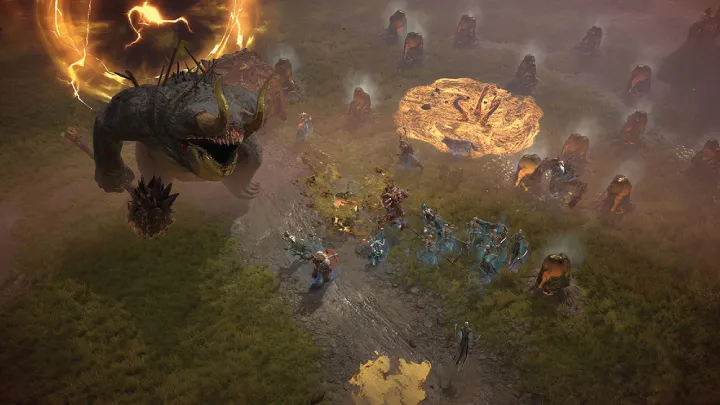
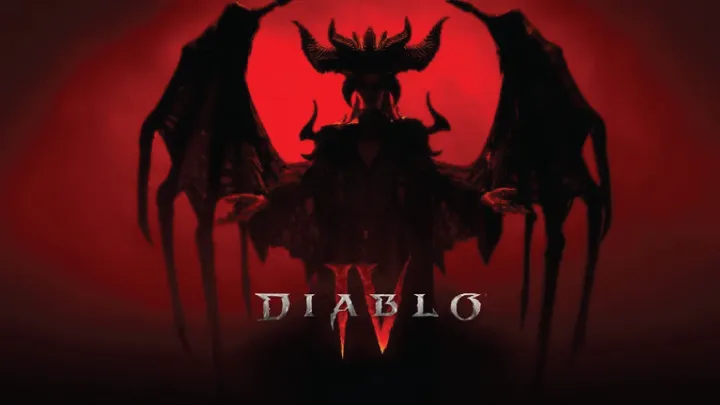
At first glance, Diablo IV feels like a return to form for the franchise—dark tone, satisfying combat, and a seemingly deep system of character building. Players are given skill trees, legendary aspects, and a wide range of affixes that suggest near-infinite build diversity. In the early hours, this illusion holds strong. You experiment, mix abilities, and feel like every decision shapes a unique playstyle.
But as time goes on, something subtle starts to break. The deeper you go, the more your choices begin to narrow. Builds that once felt creative start to fall apart, replaced by a small set of mathematically superior paths. This is not a coincidence—it is the result of a systemic interaction between level scaling and itemization. Together, they don’t just influence gameplay; they quietly dictate it.
The Promise of Build Freedom in the Early Game
In the beginning, Diablo IV feels incredibly open. You can try different skills without being punished, mix damage types, and even play inefficient builds without major consequences. Enemies are forgiving, and progression feels smooth.
This early freedom is important because it sets expectations. The game teaches you that experimentation is part of the experience. You are encouraged to explore the system rather than optimize it.
However, this freedom is temporary. It exists because the game hasn’t yet started enforcing its deeper systems. Once scaling and gear optimization begin to matter, that openness starts to shrink.
Why Early Freedom Works
- Low difficulty allows experimentation
- Skill costs are cheap to reset
- Gear does not heavily dictate performance
Level Scaling and the Loss of Power Fantasy
Level scaling ensures that enemies grow alongside you. On paper, this keeps the world relevant and prevents content from becoming trivial.
But there is a hidden cost. In traditional RPGs, progression means outgrowing challenges. You revisit old areas and feel stronger. In Diablo IV, that rarely happens. Enemies remain a constant threat, no matter how much you progress.
This changes how players perceive power. Instead of feeling stronger, you feel like you are maintaining balance. And when that balance depends on efficiency, weaker builds begin to fall behind quickly.
Hidden Effect of Scaling
Scaling doesn’t just adjust difficulty—it filters builds. Only those that can keep up with rising enemy stats remain viable.
The Turning Point: When Experimentation Becomes Punishment
Midway through the game, players start noticing a shift. Builds that once worked begin to struggle. Enemies take longer to kill, and survivability becomes an issue.
This is where experimentation stops being fun and starts becoming risky. Players begin to question their choices, often turning to guides or community discussions for answers.
Instead of asking “What do I want to play?”, the question becomes “What actually works?”
Signs You’ve Hit This Point
- You respec frequently to fix performance
- Certain skills feel noticeably weaker
- Progress slows down despite leveling up
Itemization Depth vs Practical Reality
Diablo IV’s item system appears complex. There are dozens of affixes, each modifying different aspects of your build. In theory, this should allow for deep customization.
In reality, only a fraction of these stats truly matter. Damage multipliers, critical chance, and vulnerability bonuses dominate the system. Other stats exist, but they rarely compete.
This creates a gap between perceived depth and actual decision-making. You are not choosing between options—you are filtering out everything that is not optimal.
The Core Issue
Complexity without balance does not create depth. It creates noise.
Legendary Aspects and Build Dependency
Legendary aspects are one of the most exciting parts of Diablo IV. They can completely transform how a skill works, turning simple abilities into powerful build-defining tools.
But this system has a downside. Once you build around a specific aspect, your entire character becomes dependent on it. Changing builds is no longer just a matter of preference—it requires rebuilding your entire gear setup.
This creates a form of lock-in. Instead of encouraging experimentation, the system punishes it in later stages.
Behavioral Impact
- Players stick to one build longer than they want
- Switching builds feels expensive and frustrating
- Creativity decreases over time
Damage Buckets and Invisible Rules
One of the least visible but most important systems in Diablo IV is how damage is calculated. Different types of bonuses stack in different ways, creating “damage buckets.”
The problem is that the game does not clearly explain this. Players who understand it can build far more powerful characters, while others unknowingly make inefficient choices.
This creates an uneven playing field. Optimization becomes less about skill and more about hidden knowledge.
Why This Matters
When systems are not transparent, players lose agency. They are not making informed decisions—they are guessing.
Endgame Pressure and Build Convergence
As players enter endgame content, the game becomes far less forgiving. Enemies are stronger, mechanics are harsher, and efficiency becomes critical.
At this stage, the illusion of choice fully breaks down. Only a handful of builds can perform consistently, and most players gravitate toward them.
This leads to a noticeable convergence. Different players, different classes—but increasingly similar builds.
Consequences
- Reduced diversity in gameplay
- Increased reliance on meta builds
- Lower replay value
Player Psychology and the Need to Optimize
Players naturally want to succeed. When the game becomes challenging, they look for the most effective solutions.
This is not a flaw—it is human behavior. But when the game offers limited viable solutions, that behavior leads to homogenization.
Instead of expressing creativity, players follow efficiency. The system doesn’t force them directly—but it leaves them little choice.
Missed Potential in System Design
What makes this issue frustrating is that the foundation is strong. Diablo IV has all the components needed for a deep and diverse build system.
The problem lies in how these systems interact. Scaling, itemization, and damage calculation do not complement each other—they restrict each other.
With better balance and transparency, the game could support multiple viable playstyles instead of funneling players into a few optimal paths.
Potential Improvements
- Make underused stats more impactful
- Reduce reliance on strict scaling
- Improve clarity of damage systems
- Reward situational builds instead of universal ones
Long-Term Impact on Engagement
In the short term, Diablo IV is highly engaging. The constant flow of loot and upgrades creates a strong sense of progression.
But over time, that excitement fades. When players realize that most builds lead to the same destination, motivation drops.
Replayability suffers because trying something new often leads back to the same optimized structure. The journey changes, but the destination does not.
Conclusion
Diablo IV succeeds in delivering a polished and immersive action RPG experience, but its deeper systems reveal a critical flaw. The interaction between level scaling and itemization creates an illusion of choice, where players believe they have freedom but are ultimately guided toward a narrow set of optimal builds.
This does not ruin the game, but it limits its potential. True build diversity is not about having many options—it is about making those options equally meaningful. Until that balance is achieved, the system will continue to favor efficiency over creativity.