



Introduction
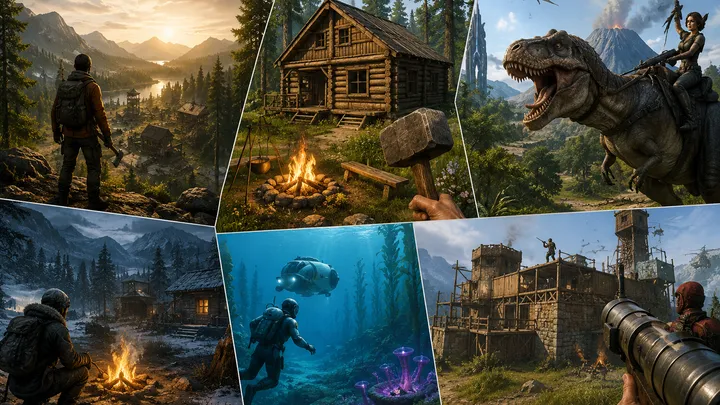
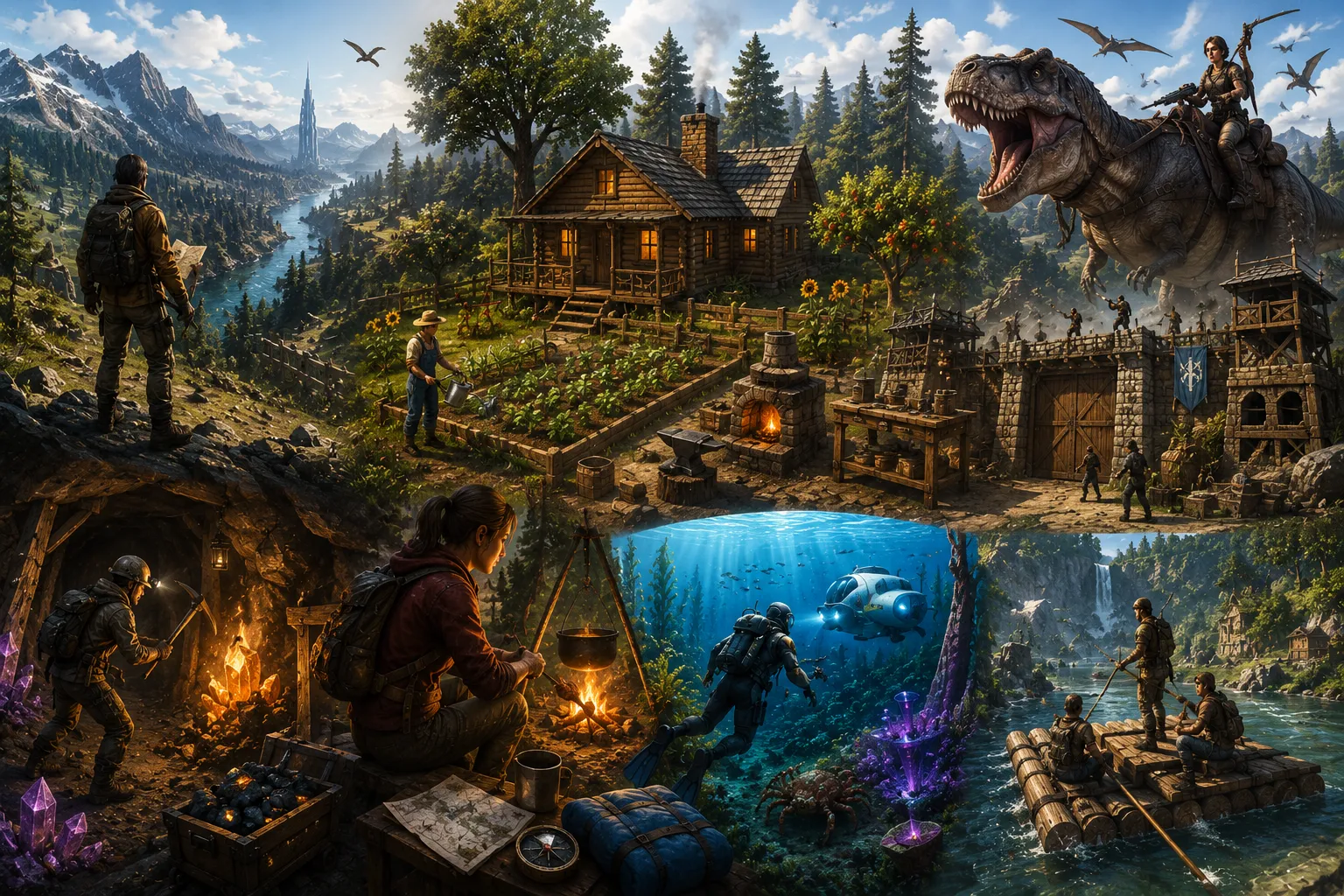
Over the last decade, open-world survival games have become one of the most influential genres in the gaming industry. What once started as a niche category focused on crafting and exploration has evolved into a massive global phenomenon that attracts millions of players across PC, console, and mobile platforms. Games like Minecraft, Rust, ARK: Survival Evolved, Sons of the Forest, Valheim, and Subnautica have proven that players are deeply interested in experiences that combine freedom, danger, creativity, and long-term progression.
Unlike traditional linear games that guide players through scripted missions, survival games place players into unpredictable worlds where every decision matters. Players must gather resources, build shelters, manage hunger, defend themselves from threats, and slowly create stability in hostile environments. This gameplay loop creates emotional investment because progression feels earned rather than given.
The rise of streaming platforms and multiplayer communities has further strengthened the genre. Survival games generate memorable stories naturally because no two experiences are exactly the same. Whether players are surviving alone in a frozen wilderness or defending a giant multiplayer base against enemy raids, the genre consistently creates tension, excitement, and social interaction.
This article explores why open-world survival games continue to dominate modern gaming, how the genre evolved, what makes survival mechanics so addictive, and why players remain emotionally attached to these virtual worlds for thousands of hours.
The Early Evolution of Survival Games
Survival Mechanics Started Small
Before survival games became mainstream, survival elements were often secondary mechanics inside other genres. Older games included hunger systems, limited resources, or environmental hazards, but survival itself was rarely the main focus.
Over time, developers realized that players enjoyed overcoming environmental challenges just as much as traditional combat or storytelling.
Minecraft Changed Everything
The explosion of Minecraft completely transformed the gaming industry. While simple on the surface, the game introduced a powerful combination of exploration, crafting, resource gathering, and unrestricted creativity.
Players were no longer simply completing missions. Instead, they were creating personal stories inside dynamic worlds.
Important Features That Influenced the Genre
- Open-ended exploration
- Crafting systems
- Day and night survival cycles
- Procedural world generation
- Player-built structures
- Resource management
Minecraft proved that freedom and creativity could generate long-term engagement more effectively than scripted gameplay alone.
Freedom Creates Emotional Investment
Players Control Their Own Goals
One of the biggest reasons survival games remain popular is the freedom they offer. Traditional games usually provide fixed objectives, but survival games allow players to create personal priorities.
Some players focus on building giant bases. Others explore dangerous areas, collect rare resources, or dominate multiplayer servers.
Self-Directed Gameplay Feels More Personal
Because players define their own objectives, progression becomes emotionally meaningful. A base built over dozens of hours feels valuable because the player created it manually through effort and planning.
Common Player Goals in Survival Games
- Building secure shelters
- Exploring dangerous regions
- Unlocking advanced technology
- Defeating powerful enemies
- Expanding territory
- Creating efficient farms
This freedom creates long-term attachment rarely seen in heavily scripted games.
Risk and Reward Make Gameplay Addictive
Danger Creates Tension
Survival games constantly place players in risky situations. Hunger, hostile creatures, harsh weather, and enemy players create uncertainty that keeps gameplay exciting.
The possibility of losing progress makes every success feel more rewarding.
Small Victories Feel Important
In many survival games, simple achievements become emotionally satisfying. Finding food during a difficult situation or surviving a dangerous night can feel surprisingly intense.
Examples of Rewarding Moments
- Escaping an ambush
- Finishing a secure base
- Surviving low-resource situations
- Recovering lost gear
- Finding rare materials
- Winning PvP encounters
Constant tension keeps players emotionally engaged for long periods.
Multiplayer Survival Changed Online Gaming
Cooperation and Betrayal Create Stories
Multiplayer survival games introduced unpredictable social interactions that transformed the genre completely.
Games like Rust became famous because player behavior itself became part of the survival challenge.
Human Players Are More Unpredictable Than AI
Artificial intelligence follows patterns, but human players create chaos, alliances, rivalries, and betrayal.
Common Multiplayer Experiences
- Forming temporary alliances
- Defending bases from raids
- Trading resources
- Territory wars
- Surprise betrayals
- Cooperative exploration
These interactions generate unique stories that players remember for years.
Base Building Became a Creative Outlet
Building Systems Expanded Dramatically
Modern survival games now include highly advanced building mechanics. Players are no longer limited to basic shelters.
Entire cities, castles, underground bunkers, and futuristic compounds can now be created inside survival environments.
Creativity Extends Replayability
Creative freedom significantly increases player retention because every world becomes unique.
Popular Base Styles
- Medieval fortresses
- Underground bunkers
- Floating houses
- Industrial factories
- Forest cabins
- Futuristic laboratories
Base building transforms survival games into creative sandbox experiences.
Progression Systems Keep Players Motivated
Constant Growth Feels Rewarding
One reason survival games remain engaging is their layered progression systems. Players continuously unlock better equipment, stronger defenses, and advanced crafting options.
This creates a powerful sense of momentum.
Technology Trees Encourage Long-Term Play
Many survival games use progression systems that slowly transition players from primitive survival to advanced technology.
Common Progression Stages
- Primitive tools
- Basic shelter building
- Farming systems
- Metal equipment
- Electricity and automation
- Endgame technology
Players remain motivated because there is always another milestone ahead.
Exploration Drives Curiosity
Open Worlds Encourage Discovery
Survival games thrive on curiosity. Large maps filled with secrets encourage players to keep exploring even after hundreds of hours.
Environmental storytelling often replaces traditional scripted narratives.
Discovery Feels Natural
Instead of following fixed missions, players uncover information organically through exploration.
Exploration Rewards
- Hidden resources
- Rare blueprints
- Secret locations
- Unique enemies
- Story fragments
- Valuable loot zones
This discovery-driven gameplay creates constant curiosity.
Streaming and Content Creation Boosted the Genre
Survival Games Are Perfect for Streaming
The unpredictable nature of survival games makes them highly entertaining to watch online.
Unexpected encounters, dramatic escapes, and emotional victories create strong viewer engagement.
Social Media Amplified Popularity
Platforms like YouTube and Twitch helped survival games reach massive audiences.
Content That Performs Well Online
- Base raids
- Hardcore survival challenges
- Funny multiplayer moments
- Massive construction projects
- PvP encounters
- Beginner survival guides
Viewer-driven popularity significantly accelerated the genre’s growth.
Modern Survival Games Continue to Evolve
New Games Add Greater Complexity
Modern survival titles continue introducing more advanced systems, including realistic weather, AI ecosystems, detailed crafting, and dynamic storytelling.
The genre constantly evolves rather than remaining static.
Hybrid Genres Are Expanding Possibilities
Many new games combine survival mechanics with RPG systems, horror elements, or large-scale multiplayer progression.
Popular Hybrid Survival Genres
- Survival horror
- Survival RPG
- Multiplayer extraction survival
- Post-apocalyptic survival
- Sci-fi survival
- Fantasy survival
Genre blending keeps survival gameplay fresh and innovative.
Why Players Keep Returning to Survival Games
Every Session Feels Different
Unlike linear games that lose replay value after completion, survival games generate endless variation through player choices and dynamic worlds.
No two survival journeys are exactly the same.
Long-Term Worlds Create Attachment
Players often become emotionally attached to bases, characters, and worlds built over hundreds of hours.
Reasons Players Return
- Expanding existing bases
- Playing with friends
- Starting new worlds
- Exploring updates
- Trying new strategies
- Reliving memorable experiences
Survival games create personal stories rather than temporary entertainment.
Conclusion
Open-world survival games continue dominating modern gaming because they provide something many other genres cannot: meaningful freedom. Instead of guiding players through fixed experiences, survival games allow players to create their own stories through exploration, creativity, risk management, and social interaction.
The genre’s combination of tension, progression, discovery, and long-term investment creates powerful emotional engagement. Whether building massive bases, surviving dangerous environments, or forming alliances with other players, every action contributes to a unique and highly personal experience.
As technology continues advancing, survival games are becoming even more immersive through improved AI systems, larger worlds, realistic environments, and deeper multiplayer interaction. Yet despite these innovations, the core appeal remains unchanged: players enjoy overcoming challenges and building stability inside unpredictable worlds.
Perhaps that is why survival games remain so successful. They transform simple gameplay systems into deeply personal adventures where every victory feels earned and every world becomes a reflection of the player’s own decisions and creativity.